Jaklin Riegelmann & Casambiente - Property Consultants & Estate Agents
-
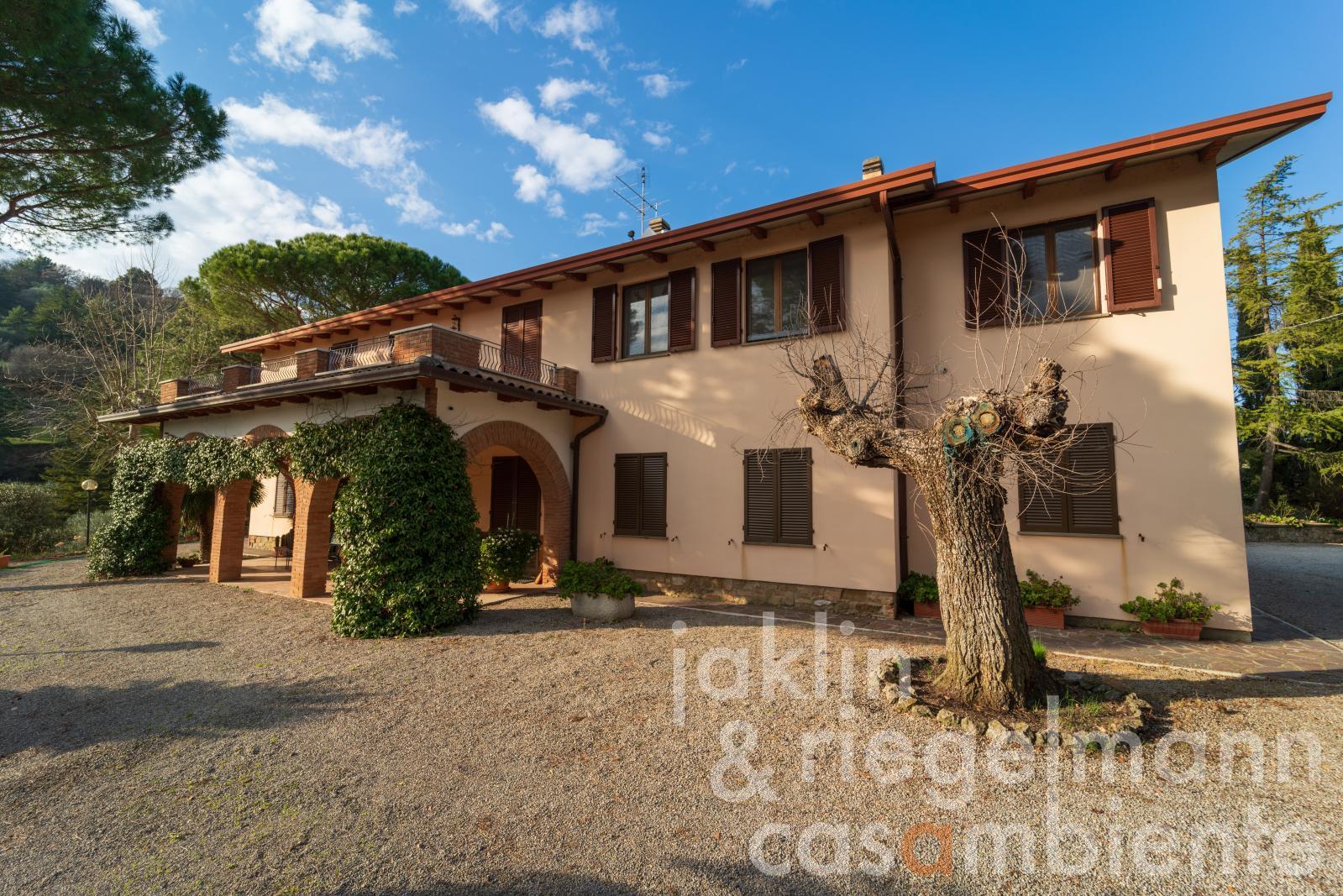
Property M3571
Italy, Umbria, PerugiaSpacious country estate with manor house and guest house near Lake Trasimeno and Perugia
Spacious country estate for sale near Lake Trasimeno and Perugia, with a mansion house, guest house, outbuildings and swimming pool in a beautiful south-facing position. Wealthy citizens from Perugia kept a country estate in the countryside to enjoy the weekends and summertime with family and friends. This is an example of this. The property offers an ideal solution for family, ...
-
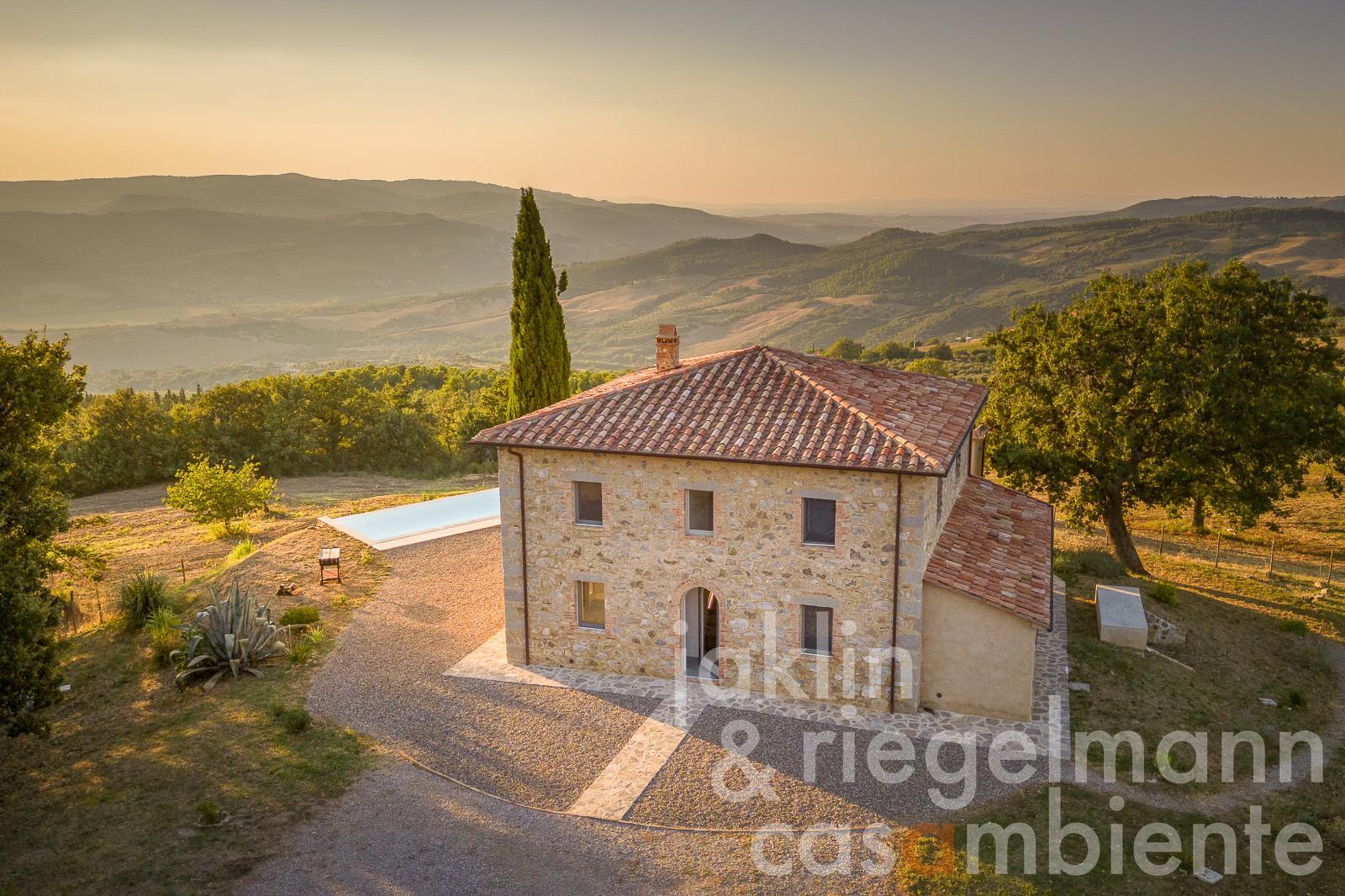
Property M4096
Italy, Tuscany, SienaRestored farmhouse with salt water infinity pool and some 9 ha of land in the Val d'Orcia
This unique farmhouse for sale, with nothing less than spectacular views, is situated in Tuscany, in the renowned Val d'Orcia region which was added to the UNESCO list of World Heritage Sites. Completed in 2021, the renovation has preserved the original character of the farmhouse, with its typical Tuscan exposed beams and stone façades, while incorporating modern features, ...
-
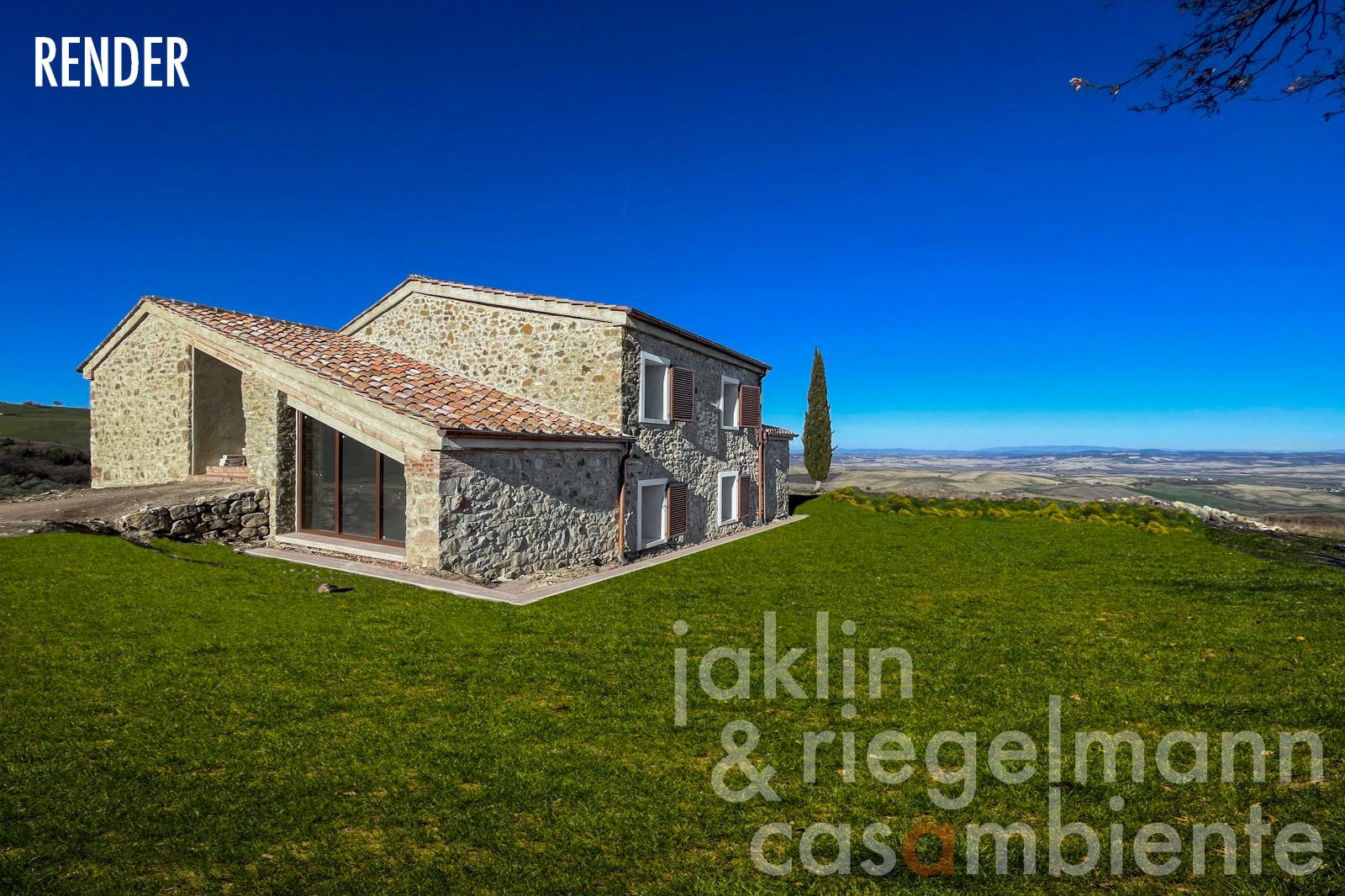
Property M4119
Italy, Tuscany, SienaA-rated, energy-efficient farmhouse, recently restored, with stunning views over the Val d'Orcia
This amazing property for sale with to die for views over the Val d'Orcia in Tuscany, is composed of a stone farmhouse with 10 x 5 meter infinity pool, both in the final phase of renovation/construction, as well as a carport and annexe building complete with approx. 2.2 ha of land. The property has been designed to achieve an A energy rating. The annexe building is used as a ...
-
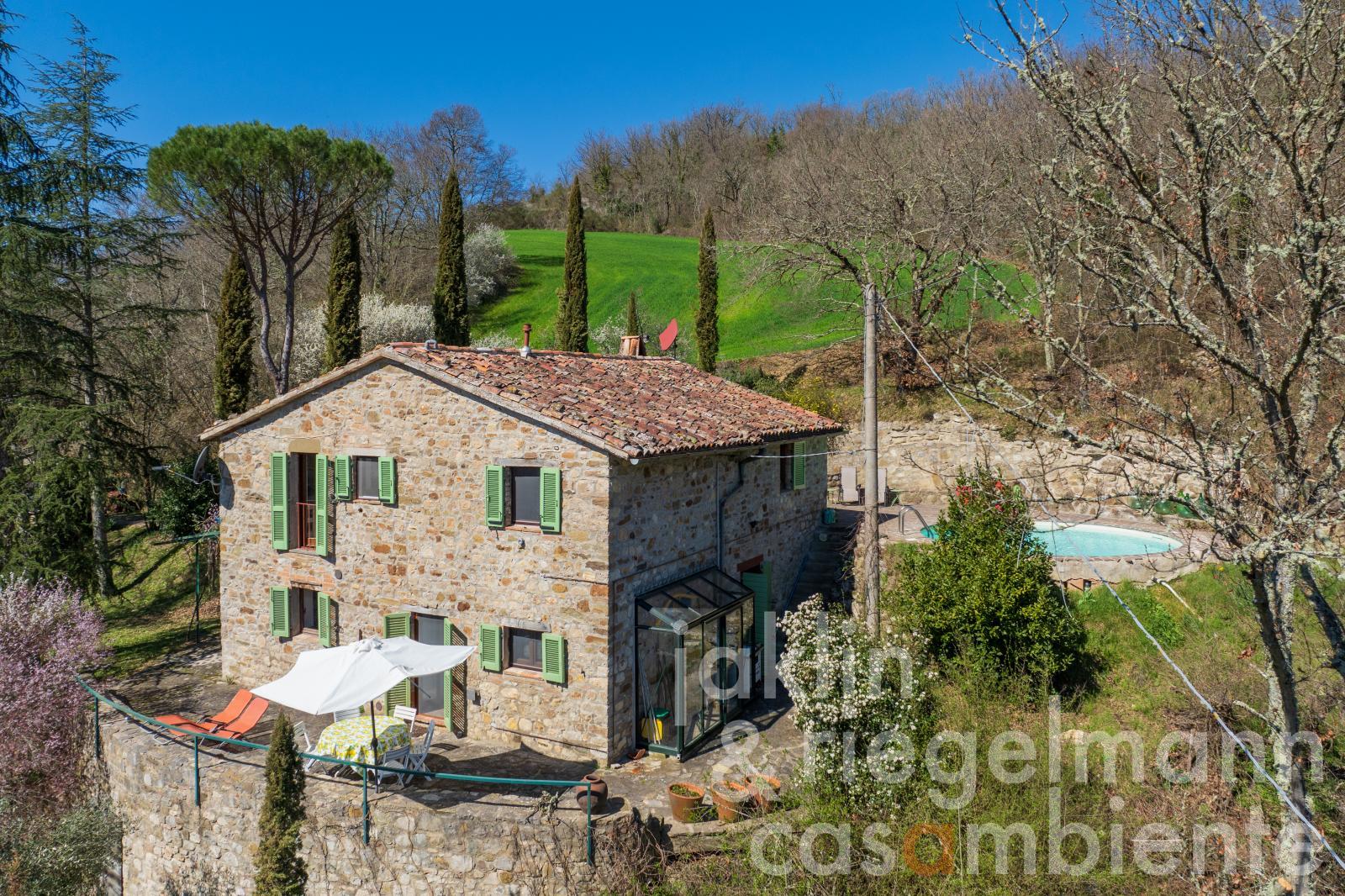
Property M4118
Italy, Umbria, PerugiaRenovated stone house with pool, private well and large plot bordering a brook
This lovingly renovated stone house for sale on two levels with pool is situated in a very quiet, secluded location, romantically nestled in the countryside yet only a few minutes' drive from the well-known village of Montecastello di Vibio. The house is set in approx. 5.5 hectares of land with woods, pastures and meadows and borders directly on a small stream. There are ...
-
Property M3489
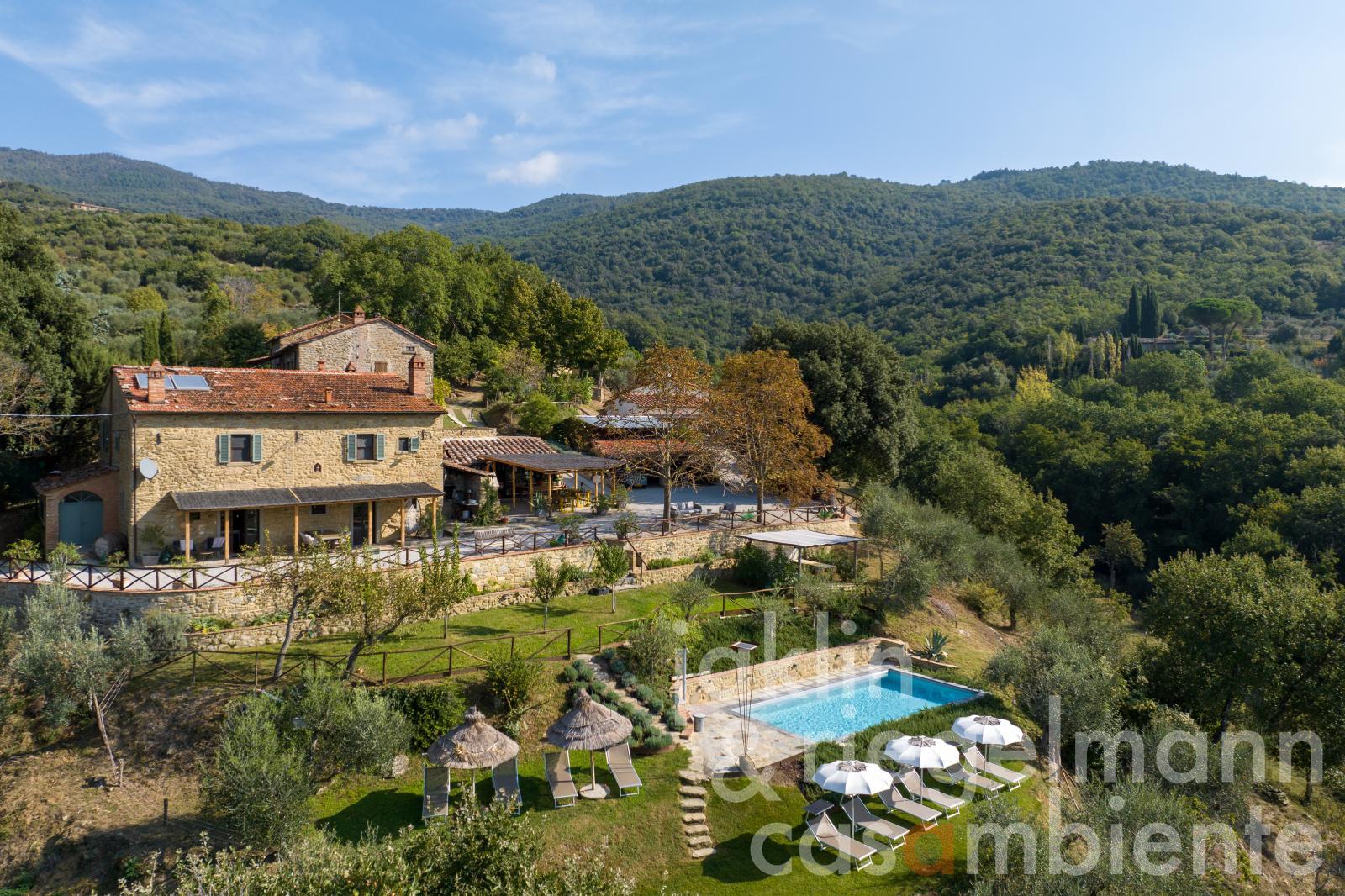
Italy, Tuscany, ArezzoAgriturismo in Tuscany with 4 apartments, pool and panoramic views near Cortona
This special Tuscan agriturismo for sale has its own boutique style with 4 renovated apartments, new pool and breathtaking views of the Val di Chiana, all surrounded by olive trees. Bustling Cortona is just a few kilometres away and Florence, Siena, Assisi and Perugia are all within easy reach. The 4 apartments for guests, ranging from 2 to 6 people, are all stylishly and ...
-
Property M6493
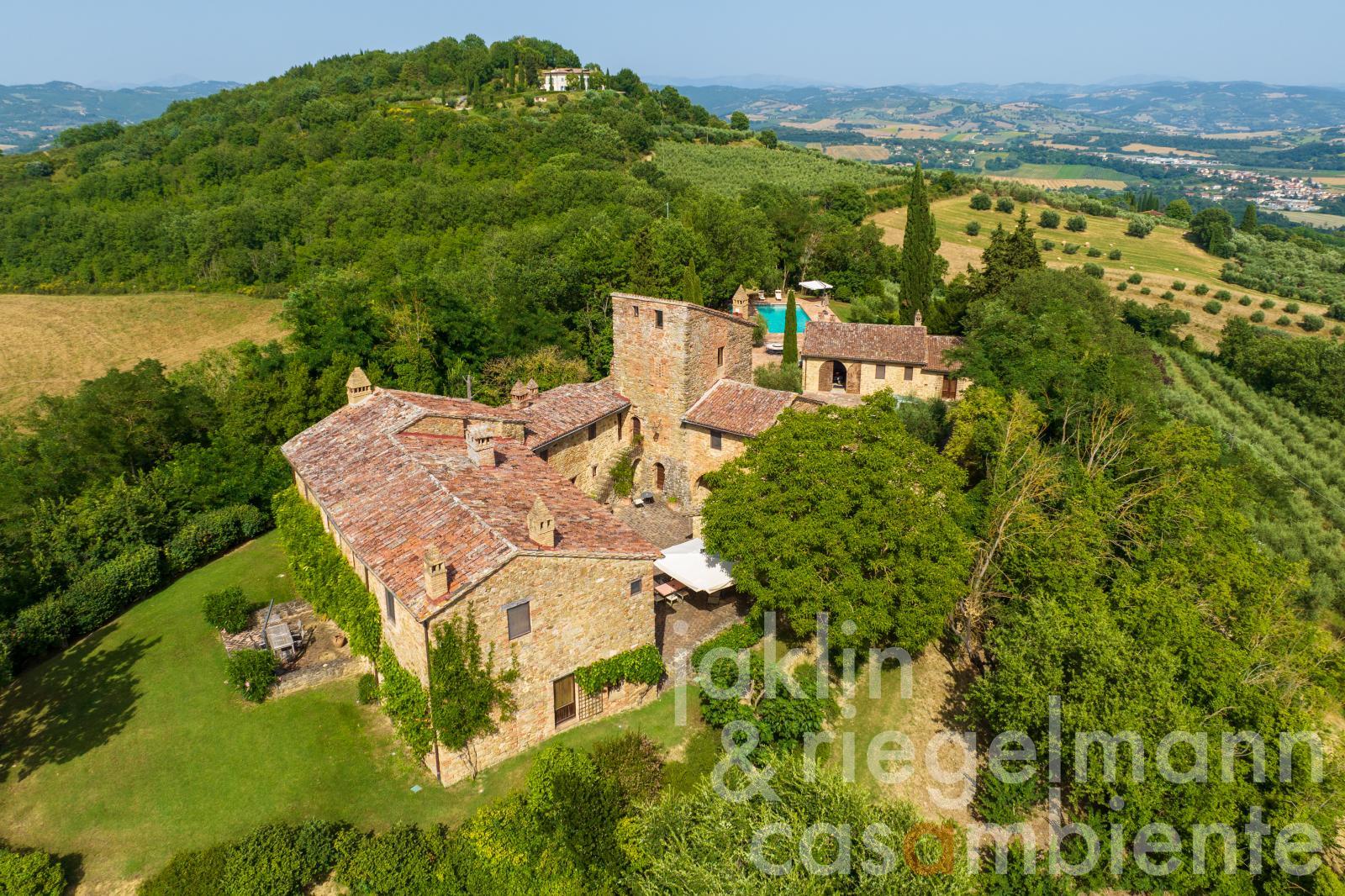
Italy, Umbria, PerugiaExtraordinary estate with own wine and olive oil production near Perugia
Country Estate for sale with approx. 27 hectares of land, a renovated hamlet, own wine production, own olive oil production (approx. 2,500 producing olive trees), swimming pool and tennis court at 12 km from the center of Perugia in Umbria. The medieval hamlet was completely renovated in 2000 and sits in the middle of the estate, on the highest point, with a very impressive and ...
-
Property M4085
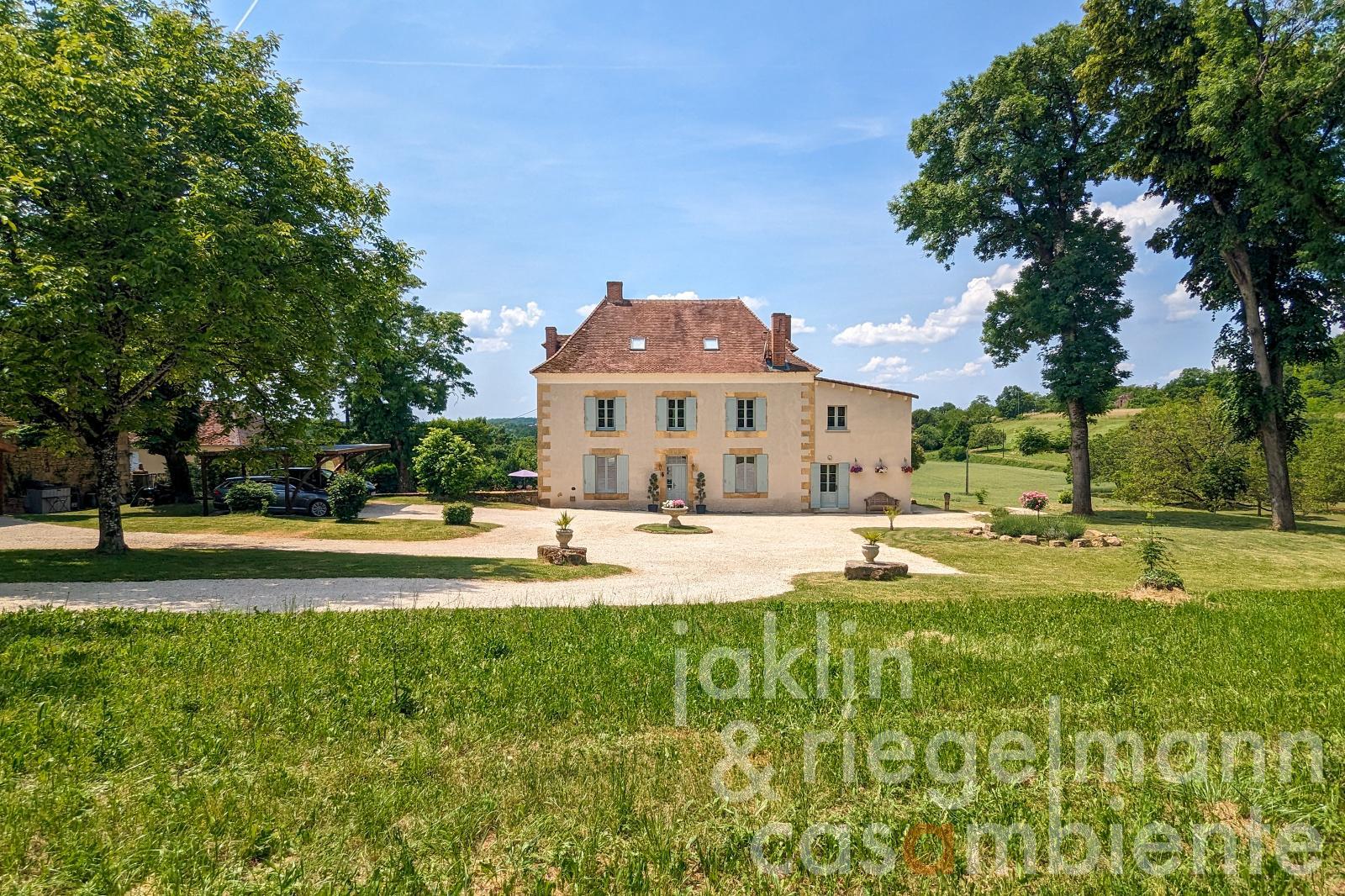
France, Nouvelle-Aquitaine, DordogneDordogne - elegant 5-bedroom Manoir with garage and pool
Very distinguished and elegant 1789 Manoir for sale in the popular area of the Dordogne in a magnificent and quiet panoramic location with a south-western exposure. The département is located in the east of the Nouvelle-Aquitaine region. The historical and stunning Périgueux is the main city of the area. The Manoir sympathetically refurbished and furnished a few years ago. The ...